Venezuela’s oil pact adds to U.S. role in post-Maduro transition
Venezuela’s interim government signed an oil pact with the United States on August 28; the BBC reported 100-year concessions over 17 oilfields and U.S. control of more than 65 billion barrels, while Machado criticized the deal’s transparency and U.S. dominance. Washington backs institutional reforms, Rodríguez has promised constitutionally required elections under a renewed electoral authority without setting a date, and the opposition is pressing for a 2027 vote. U.S. forces captured Maduro and Flores on January 3; both deny the charges and pleaded not guilty, their trial is scheduled for June 1, 2027, and the case was reassigned to Judge Analisa Torres after Judge Hellerstein’s death.
Summary written by our automated pipeline from the outlets' reporting. How it works
32 outlets in 22 countries, 11 relaying others' reporting
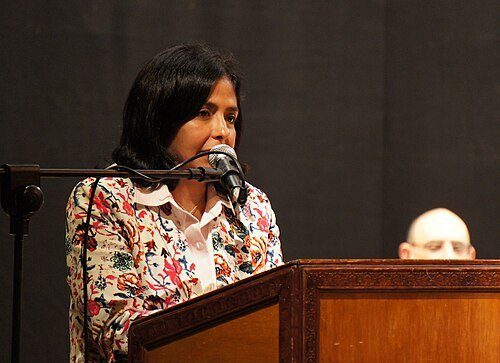
Jorge Rodriguez, Venezuelan National Assembly president
The third round's agenda centred on strengthening democracy and the judicial authority, freedom of speech, the right to information, and measures to eliminate the consequences of the earthquake.
According to the court decision, an Anthropic executive questioned Palantir's use of Claude during the military operation that captured Venezuelan president Nicolas Maduro on January 3.
Points where outlets or parties give conflicting facts or readings. Each side is summarised by our pipeline; its sources are listed under it.
Disputed Who directs Venezuela’s transition
Washington said it was in charge of Venezuela.
Sources (1)
Washington, U.S. administration · our summary of Clarín
Rodríguez said decisions about Venezuela’s transformation are made, signed and announced in Venezuela.
Sources (1)
“The decisions regarding this transformation are made here, signed here, and announced here—before you.”
Delcy Rodríguez, Venezuela's interim president · quoted in teleSUR English, via Presidential Press Office
Disputed How to characterize U.S. control over Venezuelan oil
The White House said the broader agreement would give the United States majority control over proven Venezuelan reserves.
Sources (1)
White House, U.S. executive office · our summary of Fox News
Machado said dominant U.S. rights over Venezuelan oil amounted to resource plunder.
Sources (1)
María Corina Machado, Venezuelan opposition leader · our summary of Yonhap News Agency, via Axios
Disputed The legal character of the U.S. operation to capture Maduro and Flores
The Trump administration characterized the raid as a surgical law-enforcement operation.
Sources (1)
the Donald Trump administration, U.S. presidential administration · our summary of Clarín, via AP
Maduro challenged the capture’s legality; ALBA organizations called it a kidnapping and said it violated international law, while Russia’s Foreign Ministry described the abduction as a violation of international-law norms and principles.
Sources (2)
Nicolás Maduro, Venezuelan president · our summary of Yonhap News Agency
Nicolás Maduro, Venezuelan president · our summary of teleSUR English, via Agencies
Disputed Who should oversee the transition
Rodríguez said her government should oversee a transition of this magnitude.
Sources (1)
Delcy Rodríguez, Venezuela's interim president · our summary of BBC News
Machado dismissed Rodríguez’s proposal as illogical.
Sources (1)
María Corina Machado, Venezuelan opposition leader · our summary of BBC News
Accounts conflict The criminal accusations against Maduro and Flores
U.S. authorities accuse Maduro and Flores of crimes, including drug trafficking and weapons offenses; U.S. justice also accuses Maduro of using political office to enable cocaine smuggling.
Sources (2)
United States · our summary of Meduza, via The New York Times
U.S. justice, U.S. Department of Justice · our summary of Der Spiegel
Maduro and Flores deny the accusations, and Fox reported that both pleaded not guilty.
Sources (2)
Nicolás Maduro, Venezuelan president · our summary of Meduza, via The New York Times
Different emphasis Whether setting an election date should be the immediate priority
Rodríguez said the political horizon should be judged by a sequence of goals rather than a calendar date, including fair participation and elections that do not cause conflict.
Sources (2)
Delcy Rodríguez, Venezuela's interim president · our summary of Clarín, via EFE
As quoted in Spanish, with a machine translation
“…no se mide como una fecha en el calendario”
Machine translation: “…is not measured as a date on the calendar”
Delcy Rodríguez, Venezuela's interim president · our summary of Clarín, via EFE
As quoted in Spanish, with a machine translation
“…un marco de verdadera convivencia democrática y paz, una reforma jurídica ordenada, garantía de condiciones reales de participación justa para todas las fuerzas políticas del país”
Machine translation: “…a framework of genuine democratic coexistence and peace, an orderly legal reform, a guarantee of real conditions for fair participation by all the country's political forces”
Alvarez said setting a date is the most important immediate step and that a real transition can begin only after one is set.
Sources (2)
Henry Alvarez, Vente Venezuela official · our summary of Yonhap News Agency
Henry Alvarez, Vente Venezuela official · our summary of Yonhap News Agency
As quoted in Korean, with a machine translation
“그래야만 진정한 전환이 시작될 수 있고, 베네수엘라 국민이 평온한 마음으로 미래를 확신할 수 있을 것”
Machine translation: “Only then can a genuine transition begin, and the people of Venezuela will be able to look to the future with peace of mind and confidence.”
Other voices
Reactions from other countries and bodies, others involved, and commentary.
Others involved
some quarters of the US legal community, Legal community members
Some in US legal circles expressed concern about Hellerstein's age early in the Maduro trial.
ALBA Movements and the International Peoples’ Assembly, Activist organizations
The organizations alleged that U.S. troops kidnapped Maduro and Flores despite neither having committed a crime and without a formal declaration of war.
Delcy Rodríguez addressed the United Nations General Assembly on September 23, 2026, discussing Venezuela's positions and calling for dialogue and national reconciliation.
“I am pleased to announce that Venezuela has begun a process of democratic transformation for its rebirth.”
Delcy Rodríguez, Venezuela's interim president · quoted in teleSUR English
The government and former deputies of the 2015 National Assembly held the final plenary of the third dialogue cycle in Caracas, reviewing institutional agreements and judicial renewal.
Rodríguez says there will be elections, all those mandated by the Constitution, organized by a renewed electoral authority with the world as witness.
Delcy Rodríguez, Venezuela's interim president · our summary of Clarín, via EFEAs quoted in Spanish, with a machine translation
“Habrá elecciones, todas las que manda nuestra Constitución, organizadas por una autoridad electoral renovada y con el mundo como testigo”
Machine translation: “There will be elections, all those mandated by our Constitution, organized by a renewed electoral authority and with the world as a witness”
Rodríguez did not give a precise date for the elections.
Each outlet's headline, linked to its article. Non-English headlines are machine-translated. The groupings and notes on what each outlet emphasises are automated.
Written by our automated pipeline from the statements in the coverage; each point lists the statements it rests on.
Key points
The BBC reported that the agreement gives the United States control over more than 65 billion barrels of Venezuelan oil and grants a U.S.-led company 100-year concessions over 17 oilfields. teleSUR projected about $209 billion in revenue for Venezuela during the pact’s first 25 years; El País described it as transferring 20% of the country’s reserves.
Trump promoted the agreement and its expected energy and fuel-price benefits, and the White House said the broader pact would give the United States majority control over about 65 billion barrels of proven reserves. Rodríguez praised bilateral energy cooperation through dialogue. Machado said the pact lacked the transparency Venezuelan society demands and that dominant U.S. rights over the oil amounted to resource plunder; critics said Washington had not pushed for a democratic transition.
Sources (4)
Donald Trump, U.S. president · our summary of BBC News
Donald Trump, U.S. president · our summary of El País
Donald Trump, U.S. president · our summary of The Guardian
“The oil provided is being provided to the United States at zero cost to the American taxpayer”
Donald Trump, U.S. president · quoted in The Guardian
The government and former 2015 National Assembly deputies held a third round of talks on institutions and judicial renewal. Washington’s roadmap calls for judicial and electoral reforms, while Rodríguez has promised elections but no date; the opposition wants a 2027 presidential vote and says a credible transition must include Machado’s constituency.
The Trump administration defended the capture raid as a law-enforcement operation. Maduro challenged its legality and claimed sovereign immunity; Flores’s defense claimed immunity for her as first lady. ALBA organizations said the raid violated the U.N. Charter and disregarded extradition procedures, and Russia’s Foreign Ministry called the abduction a violation of international law. teleSUR reported that more than 100 people were killed and a similar number wounded.
Sources (4)
the Donald Trump administration, U.S. presidential administration · our summary of Clarín, via AP
Nicolás Maduro, Venezuelan president · our summary of Yonhap News Agency
Nicolás Maduro, Venezuelan president · our summary of teleSUR English, via Agencies
Cilia Flores, Venezuelan National Assembly member · our summary of teleSUR English, via Agencies
U.S. authorities accuse Maduro and Flores of crimes, and U.S. justice accuses Maduro of using political office to enable cocaine smuggling; both defendants deny the accusations and pleaded not guilty, according to Fox. Their trial is scheduled for June 1, 2027. After Hellerstein died, the court reassigned the case to Torres; Maduro’s defense intends to challenge the prosecution’s legal basis, immunity and the circumstances of his transfer.
Sources (4)
United States · our summary of Meduza, via The New York Times
Nicolás Maduro, Venezuelan president · our summary of Meduza, via The New York Times
U.S. justice, U.S. Department of Justice · our summary of Der Spiegel
Coverage of the oil agreement and U.S. access: The BBC detailed oil volumes and concessions; teleSUR emphasized cooperation and projected revenue; El País described a transfer of reserves; other reports foregrounded Machado’s criticism of U.S. control and the agreement’s transparency.
Coverage of dialogue and the transition: Reports covered dialogue rounds, U.S.-backed institutional reforms, Rodríguez’s election pledge and opposition demands for participation and a date.
Coverage of the capture and succession: Coverage described the raid, transfer to New York, Rodríguez’s interim leadership, legal objections and teleSUR’s reported death toll.
Coverage of the tanker visit: Reports connected the Venezuelan crude showcase to fuel costs and highlighted Rubio’s unusual campaign-trail appearance.
Coverage of Maduro and Flores’s U.S. case: Reports covered the accusations and denials, trial schedule, Hellerstein’s death, the reassignment and planned defense challenges.