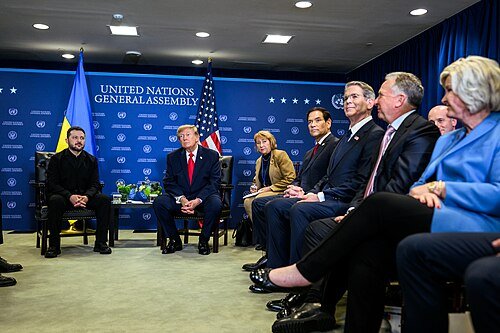
U.S. pressure on Ukraine adds to dispute over energy ceasefire terms
Officials familiar with the talks said Russia sought U.S. sanctions relief and a link between an energy pause and a Black Sea ceasefire; Ukraine said any pause must be mutual and bring Russia no extra concessions. U.S. pressure also included reported requests from envoys, a congressional proposal for a 100-day pause tied to expanded Starlink coverage, and Trump and JD Vance blaming the strikes for fuel costs, which energy experts disputed. Trump declared on Oct. 11 that both sides had agreed to an immediate energy truce, but Zelensky said Kyiv had no advance notice and would act reciprocally; on Oct. 15, he ended a U.S.-requested three-day refinery pause over continued Russian attacks, while Russia's compliance and the truce's scope and duration remained unresolved.
Summary written by our automated pipeline from the outlets' reporting. How it works
11 outlets in 9 countries, 3 relaying others' reporting · earliest dated report in our sources by Rappler (Philippines),
author of the New York Times article, New York Times journalist
The relationship between Trump and Zelensky has come close to a rupture, which would be devastating for Ukraine.
Our summary of RIA Novosti, via The New York Times
author of the New York Times article, New York Times journalist
Although European countries provide Ukraine with some intelligence, nothing can replace American intelligence.
Our summary of RIA Novosti, via The New York Times
Timeline
2026-10-09
On Oct. 9, Zelensky met a bipartisan U.S. congressional delegation in Kyiv, where lawmakers reportedly raised a 100-day pause in refinery strikes in exchange for expanded Starlink coverage.
Sources: RIA Novosti (via Wall Street Journal) · Meduza (via Wall Street Journal)
Supporting statements
Zelensky met the bipartisan US congressional delegation in Kyiv on 9 October.
Our summary of RIA Novosti, via Wall Street Journal
A group of U.S. congressmen proposed that Zelensky halt strikes on Russian oil refineries in exchange for an expanded Starlink coverage zone for Ukraine's armed forces.
group of U.S. congressmen, U.S. congressmen · our summary of Meduza, via Wall Street Journal
Under the proposal, the U.S. would extend the Starlink coverage zone 300 kilometers (186 miles) into Russian territory in exchange for Ukraine halting the strikes.
group of U.S. congressmen, U.S. congressmen · our summary of Meduza, via Wall Street Journal
2026-10-15
On Oct. 15, Zelensky said Ukraine would resume strikes on Russian oil refineries because Russia continued attacking Ukraine's energy infrastructure.
“The block (on attacking refineries) is out. We’re done”
Volodymyr Zelenskyy, Ukraine's president · quoted in Rappler, via Financial Times
Zelensky told the Financial Times that Ukraine would resume strikes on Russian oil refineries because Russia continues to attack Ukraine's energy infrastructure.
Zelensky, Ukraine's president · our summary of Ukrinform
Zelenskyy said Ukraine will resume strikes on Russian oil refineries after a three-day pause requested by the US.
Volodymyr Zelenskyy, Ukraine's president · our summary of Ukrainska Pravda
Zelensky said Kyiv lifted its pause on refinery strikes because of continued Russian attacks on Ukraine's energy grid.
Volodymyr Zelensky, Ukraine's president · our summary of The Kyiv Independent, via Reuters
2026-10-15
On Oct. 15, Ukrainian drones struck the Ryazan refinery, after Zelensky said the refinery pause was over; governor Pavel Malkov said the attack caused a fire.
Malkov said a major Ukrainian drone attack caused a fire at the refinery.
Pavel Malkov, Governor of Ryazan Oblast · our summary of Rappler
Coverage
Each outlet's headline, linked to its article. Non-English headlines are machine-translated. The groupings and notes on what each outlet emphasises are automated.
Written by our automated pipeline from the statements in the coverage; each point lists the statements it rests on.
Key points
Officials familiar with the talks said Russia sought U.S. sanctions relief and wanted to link an energy ceasefire to a Black Sea ceasefire. European diplomats said Moscow might seek frozen Russian assets; one diplomat warned released funds would almost certainly be used to escalate the war and doubted Russia genuinely intended to observe a ceasefire. Ukraine said any pause must be reciprocal and bring Russia no extra concessions.
Reports said U.S. envoys asked Kyiv to stop refinery attacks, with the U.S. side saying it had already done a lot for Ukraine and no additional compensation was needed. Separately, lawmakers proposed a 100-day halt in exchange for expanded Starlink coverage extending 300 kilometers into Russia. Vance urged Ukraine to stop striking Russian energy facilities, saying the attacks raise costs for Americans.
Sources (3)
Our summary of RIA Novosti, via Wall Street Journal
group of U.S. congressmen, U.S. congressmen · our summary of Meduza, via Wall Street Journal
group of U.S. congressmen, U.S. congressmen · our summary of Meduza, via Wall Street Journal
Trump said both sides had agreed to an immediate ceasefire, but Zelensky said he knew of no ceasefire already agreed, had received no advance notice and described Ukraine's readiness as conditional on Russian reciprocity and U.S. agreement. Peskov said contacts continued, while Kallas said Russian compliance was uncertain and she would welcome implementation. Trump did not specify the ceasefire's scope or duration.
Zelensky said Ukraine's U.S.-requested three-day pause on refinery strikes was over because Russia continued attacking Ukraine's energy infrastructure. Reports described repeated Ukrainian refinery strikes, damage at the Ryazan refinery, and Russian strikes that left Ukrainian families without power; Ukrainian officials described repairs and efforts to strengthen the power system.
Sources (4)
“The block (on attacking refineries) is out. We’re done”
Volodymyr Zelenskyy, Ukraine's president · quoted in Rappler, via Financial Times
Zelensky, Ukraine's president · our summary of Ukrinform
Volodymyr Zelenskyy, Ukraine's president · our summary of Ukrainska Pravda
Volodymyr Zelensky, Ukraine's president · our summary of The Kyiv Independent, via Reuters
The BBC reported Russian diesel exports fell from about 810,000 barrels per day in 2025 to about 140,000 in September 2026. Reports and analysts linked refinery attacks to reduced fuel production, shortages and supply concerns; Rory Johnson said the attacks were bringing the war's effects to Russia and largely removing a major diesel exporter from the market.
How coverage differed
Ukrainian outlets: Coverage highlighted Ukraine's reciprocal terms for a ceasefire, the end of the refinery-strike pause and Russian attacks on Ukrainian energy infrastructure.
Yonhap relaying The New York Times: Coverage described the reported U.S. request to halt refinery attacks and the U.S. side's response when Ukrainian representatives asked about compensation.
RIA Novosti and Meduza relaying The Wall Street Journal: Coverage described the reported 100-day refinery-strike pause proposal tied to expanded Starlink coverage and Zelensky's reported willingness to soften his position if allies supplied more Patriot missiles.
Reports on Vance's interview: Coverage included Vance's argument about energy costs, his call for Ukraine to stop strikes and his remarks on NATO and U.S.-Ukraine ties.
BBC, Meduza, Clarín, South China Morning Post and The Guardian on refinery strikes and fuel supply: Coverage linked the refinery campaign to reduced Russian diesel exports and fuel shortages and included analysts' assessments of market effects.
Fox News opinion: An opinion article cited an ISW estimate of energy damage and argued that Russia should halt strikes on Ukraine's power grid and cities.