glade.news
DiplomacyReports from 25 Sep to 7 Nov 2026

Iran calls U.S. response insufficient as Hormuz talks remain stuck on sequencing

Iranian officials said Washington’s response to Tehran’s seven-condition proposal was insufficient or still under review, while Iran maintained that the Strait of Hormuz should reopen only after its conditions were met. A U.S.-reported sequence called for reopening the Strait first and implementing Iran’s conditions gradually, leaving the order of steps a central dispute as messages continued through mediators.

Summary written by our automated pipeline from the outlets' reporting. How it works

32 outlets in 21 countries, 6 relaying others' reporting

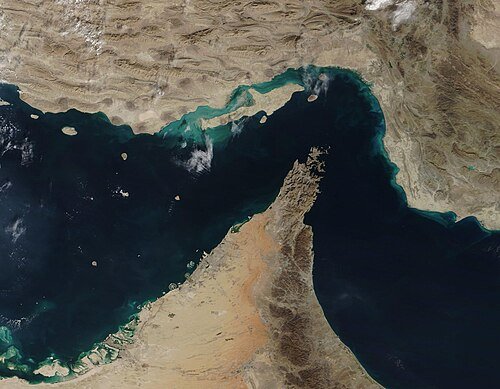
Satellite image of the Strait of Hormuz, taken December 2, 2020. Archive image; not a photograph of the reported talks.
Photo credits

In their own words

Grouped by where each speaker is from. Quotation marks are the speaker's own words; other lines are our summaries.

Iran

Government

Iran's proposal called for a seven-day countdown to reopening the Strait of Hormuz and a pause in fighting.

Our summary of NDTV, via Reuters · also 1 other outlet

Masoud Pezeshkian, Iran's president

Pezeshkian said the proposal was developed in coordination with Mojtaba Jamenei and that a six-member team with decision-making authority had been established.

Our summary of Clarín

More from Iran (2)
Abbas Araghchi, Iran's foreign minister
“We have introduced a plan to the United States through the intermediators that if certain conditions are met, the Strait of Hormuz would be open on the end of the seventh day and…”

Quoted in NDTV · also 1 other outlet

Esmaeil Baghaei, Iranian Foreign Ministry spokesperson

Iran is extremely dissatisfied with the situation because security in the Strait of Hormuz is especially important to it.

Our summary of RIA Novosti

As quoted in Russian, with a machine translation

“Мы крайне недовольны сложившейся ситуацией, поскольку безопасность в Ормузском проливе прежде всего важна именно для нас”

Machine translation: “We are extremely dissatisfied with the situation that has developed, because security in the Strait of Hormuz is important above all to us.”

United States

Government

The US side believes that measures such as a naval blockade and other sanctions against Iran are increasing its negotiating leverage.

Our summary of The Hankyoreh, via The Wall Street Journal

Donald Trump, U.S. president

Trump has said he is not in a hurry to reach a deal.

Our summary of PBS NewsHour

More from United States (2)
Donald Trump, U.S. president

Donald Trump said he was in no hurry to reach an agreement.

Our summary of Clarín

A US official, U.S. government official

A US official told Reuters that the United States and Iran were having positive and constructive discussions through mediators.

Our summary of CGTN, via Wall Street Journal

Where accounts differ

Points where outlets or parties give conflicting facts or readings. Each side is summarised by our pipeline; its sources are listed under it.

Accounts conflict Whether U.S. authorities ordered the Iranian delegation to leave New York and when it departed

U.S. officials said Rubio ordered the delegation to leave immediately and placed its departure early Tuesday; U.S. authorities also said delegation members had been expelled.

Sources (1)

United States · our summary of RIA Novosti

Iran’s U.N. mission said the delegation left Monday evening on a prearranged schedule, and Araghchi said it traveled under an approved itinerary rather than being expelled.

Sources (1)

Abbas Araghchi, Iran's foreign minister · our summary of RIA Novosti

As quoted in Russian, with a machine translation

“Утверждение американцев о том, что они выслали иранскую делегацию – не важно правда это или нет – действительно странно, так как мы прибыли (в США – ред.) и вернулись (в Иран…”

Machine translation: “The Americans’ claim that they expelled the Iranian delegation—whether it is true or not—is really strange, since we arrived (in the US—editor’s note) and returned (to…”

Disputed Whether Trump’s public rejection meant the United States had formally rejected the current proposal

Trump publicly said he had rejected Iran’s proposal.

AP-cited U.S. and regional officials said the current proposal had not been officially rejected and suggested Trump’s remarks might have been a negotiating tactic. Araghchi said Iran awaited a definitive position through mediators; Iranian officials later said a response arrived without disclosing whether it rejected the proposal.

Sources (1)

Our summary of The Times of Israel

Disputed Which side should act first under the seven-day proposal

Iranian officials said the United States must meet Iran’s conditions before the Strait reopens; Rezaei said Iran would not negotiate until those conditions were met.

Sources (1)
“…we presented seven conditions to the Americans and clearly stated that the Strait of Hormuz would not be opened to them, and no negotiations would take place, until these…”
Mohsen Rezaei, Iranian security council official · quoted in NDTV

Qashqavi said Washington’s response called for Iran to reopen the Strait first, with Iran’s seven conditions implemented gradually afterward.

Other voices

Reactions from other countries and bodies, others involved, and commentary.

Palestine

Gaza health officials

Gaza health officials said Israeli attacks and fire had killed 1,408 people.

Our summary of Clarín

Others involved

Al Jazeera

Al Jazeera assessed that Iran's seven-day ceasefire proposal was part of a broader bargain involving control of the Strait of Hormuz and developments in Yemen, rather than a plan aimed only at ending the war.

Our summary of Hürriyet, via Al Jazeera

Al Jazeera

Al Jazeera's analysis said Tehran was trying to use pressure on Washington arising from higher energy prices amid the Strait of Hormuz crisis and the approaching US midterm elections.

Our summary of Hürriyet, via Al Jazeera

Commentary

Trita Parsi, Quincy Institute analyst

Parsi said Araghchi suggested that a speedy agreement could help Trump ahead of the November midterm elections.

Our summary of The Hindu · also 2 other outlets

Trita Parsi, Quincy Institute analyst

Parsi expressed deep suspicion that Iran might be buying time to export more oil and ease its economic difficulties.

Our summary of The Hindu · also 1 other outlet

Ali Vaez, International Crisis Group analyst

Vaez characterized the proposal as a smart move.

Our summary of Hürriyet, via The New York Times

Ali Vaez, International Crisis Group analyst

Vaez said the plan could appeal to Trump by ending a publicly unpopular war and lowering energy prices before the midterm elections, while restoring terms favorable to Iran.

Our summary of Hürriyet, via The New York Times

Timeline

  1. 2026-09-24

    An attendee said Araghchi detailed the proposal at a private gathering on the sidelines of the U.N. General Assembly in New York on September 24.

    Sources: The Hindu

    Supporting statements

    According to an attendee, Abbas Araghchi detailed the proposal at a private gathering on the sidelines of the UN General Assembly in New York on September 24, 2026.

    Our summary of The Hindu
  2. 2026-09-26

    Trump publicly said he had rejected Iran’s seven-day plan on September 26.

    Sources: Yonhap News Agency

    Supporting statements

    Trump rejected Iran's seven-day plan on September 26.

    Our summary of Yonhap News Agency
  3. 2026-09-26

    Trump posted a map labeling the Strait of Hormuz “Trump Strait” on September 26; Yonhap and The Hankyoreh interpreted the post as signaling rejection of Iran’s proposal.

    Sources: RIA Novosti · Yonhap News Agency · The Hankyoreh

    Supporting statements

    Donald Trump posted an image of a map showing the Strait of Hormuz on Truth Social and labeled it “Trump Strait.”

    Our summary of RIA Novosti

    The article interprets Trump's map post as indicating that he would not recognize Iran's control of the Strait of Hormuz and would reject Iran's proposal.

    Our summary of Yonhap News Agency

    The article interprets Trump's first response after Iran proposed a seven-day ceasefire plan to reopen the Strait of Hormuz as effectively indicating rejection.

    Our summary of The Hankyoreh
  4. 2026-10-04

    Baghaei said on October 4 that Iran had conveyed its position on the U.S. response through Qatar, that U.S. proposals concerned nuclear issues and that Iran would review details and send additional points.

    Sources: Xinhua

    Supporting statements

    Baghaei said Iran had conveyed its positions through Qatar regarding the U.S. response to Iran's proposed plan to end the war and reopen the Strait of Hormuz.

    Esmaeil Baghaei, Iranian Foreign Ministry spokesperson · our summary of Xinhua
    “The Americans' proposals are more or less in line with their previous positions, and specifically concern the nuclear issues.”
    Esmaeil Baghaei, Iranian Foreign Ministry spokesperson · quoted in Xinhua
    “We will conduct the necessary reviews regarding certain details (of the U.S. proposals) and convey our additional points to the other party”
    Esmaeil Baghaei, Iranian Foreign Ministry spokesperson · quoted in Xinhua
  5. 2026-10-08

    Araghchi said on October 8 that Tehran was studying Washington’s response and might reply within days; he said negotiations were continuing.

    Sources: CGTN · CGTN (via Tasnim News Agency)

    Supporting statements

    Araghchi said Iran and the United States were continuing negotiations and exchanging messages through mediators.

    Seyed Abbas Araghchi, Iran's foreign minister · our summary of CGTN

    Araghchi said Iran would submit its response to US views on Iran's proposed plan in the coming days.

    Seyed Abbas Araghchi, Iran's foreign minister · our summary of CGTN, via Tasnim News Agency
  6. 2026-10-11

    Rezaei said on October 11 that the U.S. response to Iran’s conditions was insufficient, some issues remained unclear and Iran would not reopen the Strait or negotiate until its conditions were met.

    Sources: NDTV (via state media) · NDTV

    Supporting statements

    Rezaei said the US response to Iran's seven conditions in its proposal to reopen the Strait of Hormuz was insufficient.

    Mohsen Rezaei, Iranian security council official · our summary of NDTV, via state media

    Rezaei said Washington needs to clarify the issues that remain unclear to Tehran.

    Mohsen Rezaei, Iranian security council official · our summary of NDTV
    “…we presented seven conditions to the Americans and clearly stated that the Strait of Hormuz would not be opened to them, and no negotiations would take place, until these…”
    Mohsen Rezaei, Iranian security council official · quoted in NDTV
    “In their response, they have accepted some of our conditions, while others remain unclear”
    Mohsen Rezaei, Iranian security council official · quoted in NDTV
  7. 2026-10-12

    Baghaei said on October 12 that Iran was reviewing the latest U.S. points and would convey its views through mediators after the review; he said messages with the United States continued.

    Sources: Xinhua · RIA Novosti · Yonhap News Agency

    Supporting statements

    Baghaei said Iran was reviewing the latest U.S. points and would convey its views to mediators when the review concluded.

    Esmaeil Baghaei, Iranian Foreign Ministry spokesperson · our summary of Xinhua

    Exchanges of messages between Iran and the United States are continuing.

    Esmaeil Baghaei, Iranian Foreign Ministry spokesperson · our summary of RIA Novosti
    As quoted in Russian, with a machine translation

    “Обмен посланиями между Ираном и США продолжается.”

    Machine translation: “The exchange of messages between Iran and the United States is continuing.”

    Baghaei confirmed that messages between Iran and the United States were continuing through mediators including Pakistan and Qatar.

    Esmaeil Baghaei, Iranian Foreign Ministry spokesperson · our summary of Yonhap News Agency

Coverage

Each outlet's headline, linked to its article. Non-English headlines are machine-translated. The groupings and notes on what each outlet emphasises are automated.

None of our outlets is based in Yemen. Our outlets in Palestine and Qatar didn't cover it. No statements from the government or officials of Qatar, Israel, Saudi Arabia, Yemen or Pakistan are in our sources.

Group by
PBS NewsHourUnited States
Iran has suggested a deal to reopen the Strait of Hormuz in 7 days Reports officials see possible negotiating tactics
OkazSaudi Arabia
Iran: We are studying the U.S. response to the proposal to reopen “Hormuz” Translated headline. Original: إيران: ندرس الرد الأمريكي على مقترح إعادة فتح «هرمز» Links reopening to Iran's memorandum conditions
Daily MaverickSouth Africa
Qatari mediators press peace deal between US and Iran Emphasizes Qatar-led mediation and no formal rejection
Publication date unavailableRelays Reuters
China DailyChina
Iran pushes 7-day peace plan Adds reported US sanctions-relief offer
1 more from China DailyHormuz can be reopened in 7 days if conditions are met
Asahi ShimbunJapan
Iran makes new proposal to US: If conditions are accepted, “Strait of Hormuz to open within 7 days” Translated headline. Original: イラン、米国に新提案 条件受諾なら「ホルムズ海峡7日以内に開放」 Adds timing for nuclear talks
Relays The New York Times, The Washington Post
The HankyorehSouth Korea
Trump posts map on social media renaming “Hormuz” as “Trump Strait” Translated headline. Original: 트럼프, ‘호르무즈→트럼프 해협’ 지도 SNS에 올려 Frames sanctions as US negotiating leverage
1 more from The HankyorehIran proposes ‘ceasefire plan,’ but Trump signals he intends to reject it… “Could bomb after the election”
Yonhap News AgencySouth Korea
Iranian Foreign Ministry: “We will convey our position to the mediator after reviewing the U.S. proposal” Translated headline. Original: 이란 외무부 "美 제시안 검토 후 중재국에 입장 전달할 것" Distinguishes the opening and talks timelines
13 more from Yonhap News AgencyIran’s security chief: “The U.S. has responded to seven proposals… but it is still insufficient”Trump posts map renaming the Strait of Hormuz as the Strait of TrumpMiddle East solution remains elusive even at the UN General Assembly… Trump silent on Iran’s ‘7-day plan’Iran: “We conveyed a ‘7-day plan’ to open Hormuz to the US… The choice is up to the US”Iranian senior official: “Even if the US accepts the conditions for reopening the Strait of Hormuz, we will not make nuclear concessions”Iran proposes ‘7-day roadmap’ to US for reopening Hormuz (wrap-up)Iranian prices soar amid seven-month war and starvation campaign… “Bribes have gone up too”International oil prices close down more than 2% on hopes for US-Iran talksU.S. in ‘indirect talks’ with Iran amid pressure for renewed attacks… Iran’s ‘nuclear concessions’ keyIran: “Discussing ‘7-day confidence-building plan’ with mediating country to open Hormuz”Iranian FM: Still no response to offer to mediate Saudi-Houthi clashesIran delays ceasefire talks to deal Trump a blow ahead of the midterm electionsIran’s floated ‘7-day plan’ goes nowhere… Nuclear issue remains deadlocked amid behind-the-scenes mediation
France 24France
Le MondeFrance
Iran submits U.S. plan to reopen Strait of Hormuz in seven days Translated headline. Original: L’Iran a soumis aux Etats-Unis un plan de réouverture du détroit d’Ormuz en sept jours Clarifies when the seven-day period starts
2 more from Le MondeStrait of Hormuz: Massoud Pezeshkian demands an end to “pressure and threats” to revive negotiationsStrait of Hormuz: 12 crew members of an oil tanker injured
El PaísSpain
Iran sends the United States a plan to reopen the Strait of Hormuz in seven days Translated headline. Original: Irán envía a Estados Unidos un plan para la reapertura del estrecho de Ormuz en siete días Explains sequencing as an obstacle
BBC NewsUnited Kingdom
The GuardianUnited Kingdom
HürriyetTürkiye
The Background to Iran’s Ceasefire Proposal! What Is Tehran’s Real Aim? Trump Had Rejected It... ‘The Most Dangerous Trap’ Translated headline. Original: İran'ın ateşkes teklifinin arka planı! Tahran'ın asıl hedefi ne? Trump reddetmişti... 'En tehlikeli tuzak' Places the proposal in a wider regional bargain
2 more from HürriyetIran’s plan to stop the war: a 7-day conditional offer to the USUS media make a headline-shaking claim: Trump gives a date for war! Iran’s 7 conditions for opening the Strait of Hormuz
AnalysisRelays Al Jazeera
The HinduIndia
RapplerPhilippines
Also mentioned in passing by 6 outlets

More detail

Written by our automated pipeline from the statements in the coverage; each point lists the statements it rests on.

Key points

Araghchi said the seven-day clock would begin once the United States accepted Iran’s plan. He said the Strait would open on day six and talks would begin on day seven; another account described reopening at the end of the seventh day.

Sources (1)

Abbas Araghchi, Iran's foreign minister · our summary of Hürriyet, via The New York Times

As quoted in Turkish, with a machine translation

“Arabulucular aracılığıyla ABD'ye, belirli koşullar yerine getirildiği takdirde Hürmüz Boğazı'nın yedinci günün sonunda açılacağı ve görüşmelerin yeniden başlayacağı yönünde bir…”

Machine translation: “We presented the U.S., through mediators, with a plan that, if certain conditions are met, the Strait of Hormuz will be opened at the end of the seventh day and talks will resume.”

Iran’s reported conditions included a halt to hostilities across the region, including Lebanon; an end to the U.S. maritime blockade; release of frozen Iranian assets; and relief from sanctions on Iranian oil. Araghchi said many conditions were broadly similar to those in the June memorandum of understanding.

Sources (3)

Abbas Araghchi, Iran's foreign minister · our summary of The Times of Israel, via The New York Times

Abbas Araghchi, Iran's foreign minister · our summary of The Times of Israel, via The New York Times

Abbas Araghchi, Iran's foreign minister · our summary of Yonhap News Agency, via The New York Times and CNN

Trump publicly rejected Iran’s proposal. AP-cited officials said the United States had not officially rejected the current proposal and suggested his remarks might have been a negotiating tactic; Araghchi said Iran was awaiting a definitive position through mediators. Iranian officials later said a U.S. response had arrived, while Rezaei said it accepted some conditions and left others unclear.

Sources (2)

Our summary of The Times of Israel

Mohsen Rezaei, Iranian security council official · our summary of Yonhap News Agency, via Fars News Agency

As quoted in Korean, with a machine translation

“미국이 최근 이에 대한 답변을 보내왔지만, 우리의 조건 중 일부만 수용했을 뿐 나머지 사안에 대해서는 여전히 불명확한 태도를 보였다”

Machine translation: “The United States recently sent a response to this, but accepted only some of our conditions and remained unclear on the other issues”

Iranian officials described the main sticking point as the sequence of steps. Qashqavi said Washington wanted the Strait reopened first and Iran’s conditions implemented gradually; Rezaei and Qalibaf said Iran would not reopen it until its conditions were met.

Sources (1)
“…we presented seven conditions to the Americans and clearly stated that the Strait of Hormuz would not be opened to them, and no negotiations would take place, until these…”
Mohsen Rezaei, Iranian security council official · quoted in NDTV

Iranian officials said U.S. proposals focused on nuclear issues while Iran focused on the Strait and measures affecting shipping and sanctions. Vance said a deal required a meaningful reduction in Iran’s enrichment capacity and concrete action; Iran denies seeking nuclear weapons, and Eslami said Iran would not abandon enrichment or transfer enriched uranium.

Sources (2)
“The Americans' proposals are more or less in line with their previous positions, and specifically concern the nuclear issues.”
Esmaeil Baghaei, Iranian Foreign Ministry spokesperson · quoted in Xinhua

Esmaeil Baghaei, Iranian Foreign Ministry spokesperson · our summary of Xinhua

Pezeshkian called negotiations meaningless, alleging that the United States attacked Iran after talks, broke commitments and sought to overthrow Iran’s political system. He also said Iran would not walk away from negotiations, that proposals had been exchanged and revised, and that any agreement should follow a win-win strategy.

Sources (1)
“The agreement must now be based on a win-win strategy.”
Masoud Pezeshkian, Iran's president · quoted in The Times of Israel

Trump expected further talks, described Iran as seeking a different agreement from the one he wanted and said he was always considering renewed attacks. On October 8, he said the United States would not attack Iran before the midterms, called discussions productive and said the blockade would remain in force; he also denied offering sanctions relief or releasing frozen Iranian funds.

Putin conveyed Iran’s view of a possible resolution to Trump in coordination with Pezeshkian, according to Kremlin spokesman Dmitry Peskov.

How coverage differed

Iranian state sources and officials: Iranian accounts foregrounded the proposal, Tehran’s conditions, ongoing mediation and Iran’s review of U.S. points.

U.S.-focused and international reporting: Coverage described U.S. assessments of the contacts, Washington’s nuclear concerns, the response to Iran’s plan and the sequencing dispute.

Publisher logos load from the publishers' own sites. Report an error on this page · Corrections

Photo credits

Satellite image of the Strait of Hormuz, taken December 2, 2020. Archive image; not a photograph of the reported talks.

File:Strait of Hormuz (MODIS 2020-12-04).jpg · MODIS Land Rapid Response Team, NASA GSFC · Public domain

This image or video was catalogued by Goddard Space Flight Center of the United States National Aeronautics and Space Administration (NASA) under Photo ID: 2020-12-04.

Original source Original source

Public domain

Resized and JPEG encoded; thumbnail display may crop the image.